
América Nunca Fue América: El Hombre de la Confianza como Texto Fundacional
Conforme a la Regla de Indios Verdes—June, Alma Asfalto, cocaína y redes sociales—el listón para la crítica literaria es extraordinariamente alto. Nada de arte por el arte, de intentar sonar culto, inteligente o jugar para las enormes multitudes y recursos asociados hoy con las bellas letras. La obra no sólo debe ser trascendente en su relevancia, sino también lo suficientemente ignorada como para que el ejercicio de analizarla esté justificado. Uno puede entrar a la estación Indios Verdes y decirle a la gente que esto explica aquello que vuelve la vida de los pobres aún más difícil, en muchos sentidos peor que el hambre: el acto de tener que tragarse constantemente la mentira. El origen de esa cosa en la que piensas cuando no tienes tiempo de amar u odiar a Estados Unidos porque tu vida, y la nuestra también, está siendo vivida dentro de una estafa. Un fraude jugado contra cada uno de nosotros, una crucifixión sin opciones donde nadie está siendo salvado.
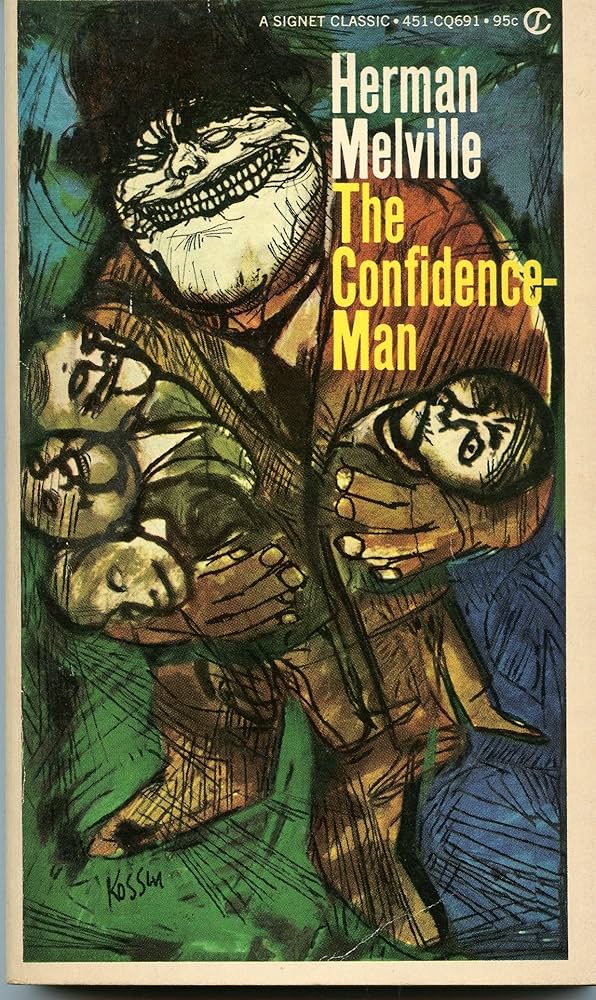
Mucho antes de las marcas personales, los influencers, las campanas de las IPO y la autoinvención convertida en religión nacional, Herman Melville vio en qué se estaba convirtiendo Estados Unidos. Lo llamó El Hombre de la Confianza. Una novela surgida de la etapa tardía y poco reconocida de su vida, que muchos han descartado como una obra informe, argumentando que sus personajes están inacabados; generalmente los mismos que no toleran libros donde los personajes hablan de algo real, cuyas vidas son una función del sistema o representan al propio sistema. El personaje principal de Melville apenas es un personaje. Cambia de identidad, de voz, de ocupación. Aparece y desaparece entre los pasajeros de un barco de vapor sobre el Mississippi vendiendo, persuadiendo, manipulando, extrayendo confianza allí donde la encuentra. Es menos un hombre que una condición desplazándose por la vida estadounidense.
Lo que Melville comprendió en 1857 fue que el hombre de la confianza no era una figura marginal operando fuera de la sociedad estadounidense. El ser construido a partir de ideas externas de éxito que no tienen nada que ver con ser un ser humano estaba integrándose en la conciencia colectiva del país. La novela apareció antes de que Estados Unidos se convirtiera plenamente en Estados Unidos, un simulacro desligado de sus ideales fundacionales, que quizá ya eran más imagen que realidad. Sin embargo, Melville vio hacia dónde se dirigía todo. El vendedor se convertiría en héroe. El promotor en visionario. La capacidad de vender sería más valiosa que aquello que se vende. Hoy no existe nada fuera del motivo de lucro. La idea estadounidense del éxito es la antítesis de las preguntas interiores: ¿Quién soy? ¿Por qué estoy aquí? ¿Para qué es todo esto? Transformamos experiencias, opiniones, ambiciones y heridas en versiones públicas de quienes afirmamos ser. Nos construimos en reversa a partir de recompensas y reconocimiento, y luego confundimos esas construcciones con nuestro verdadero yo. Es la aceptación e interiorización de algo menos que humano, tan profundamente interiorizado que cuando no somos aquello que creemos que deberíamos ser de acuerdo con nuestra mejor versión, nos culpamos a nosotros mismos, asumimos la responsabilidad por un juego diseñado para deshumanizar un siglo antes de que cualquiera de nosotros naciera.
Ése es el genio del sistema estadounidense que Melville percibió en la caracterización del Hombre de la Confianza, personaje que muchos han leído como inacabado cuando en realidad fue deliberadamente concebido como algo informe: un concepto más que una persona. No había nada allí salvo los valores y la identidad, los fantasmas bien vestidos de un sistema vagando por las cubiertas de barcos en movimiento, vaciados por dentro y viviendo la vida de alguien más hasta el punto de que aquello que alguna vez fueron, o pudieron haber sido, ya ni siquiera está realmente ahí.
Sigues ahí, Indios Verdes, eres cultura, eres vida, eres seres humanos, incluso cuando no lo parece durante el aplastamiento de las cinco de la tarde. Cualquier cosa—el hambre, un metro sofocante repleto de gente—es tolerable siempre y cuando tengamos un sentido de significado que provenga de nuestro interior. Mejor morir siendo uno mismo que pasar toda una vida viviendo la vida de alguien más.
America Has Always Never Been America: The Confidence-Man as Foundational Text
Pursuant to the Indio Verdes Rule—June, Alma Asfalto, coke and social media—the bar for literary criticism is exceedingly high. No art for art’s sake, trying to sound literate, smart, or play to the massive crowds and resources associated with belletristic letters today. The work must not only be transcendent in its relevance, but unrecognized to a certain degree so that engaging in the literary analysis is justified. One can go into Indios Verdes metro station and say to people that this explains what makes the poor life even harder, in many ways worse than hunger: the act of having to constantly eat the lie. The origin of the thing you think about when you do not have time to like or dislike America because your life, and ours too, is being lived within a scam. A fraud being played on each of us, an optionless crucifixion where no one is being saved.
Long before personal brands, influencers, IPO bells, and self-invention became the national religion, Herman Melville saw what America was becoming. He called it The Confidence-Man. A novel that came out of his late unrecognized life, that many have written off as unformed, saying that the characters are unfinished, the ones, generally, who won’t countenance books where the characters talk about anything real, whose lives are a function of the system, or represent the system itself. Melville’s title character is barely a character at all. He changes identities, voices, occupations. He appears and reappears among the passengers of a Mississippi riverboat selling, persuading, manipulating, extracting trust wherever he finds it. He is less a man than a condition moving through American life.
What Melville understood in 1857 was that the confidence man was not some marginal figure operating outside American society. The reverse-engineered being from external ideas of success that have nothing to do with being a human being was integrating into the American collective consciousness. The novel appeared before America fully became the America, an unrelated simulacrum to the founding ideals, which may themselves have been more image than reality. Yet Melville saw where it was headed. The salesman would become a hero. The promoter a visionary. The ability to sell more valuable than the thing being sold. Today, there is nothing outside of the profit motive. The American idea of success is the antithesis of the internal questioning: Who am I? Why am I here? What is all of this for? We transform experiences, opinions, ambitions, and wounds into public-facing versions of who we claim to be. We are formed by rewards and recognition, then mistake those constructions for being our best selves. It is the acceptance and internalization of something less than human so internalized that when we are not those things that we think we ought to be pursuant to our best selves, we blame ourselves, take responsibility for a game that was set to dehumanize 100 years before any of us were born. This is the genius of the American system that Melville realized in the characterization of the Confidence Man that people have read as unfinished, when it was intentionally unformed, a concept more than an actual person, in which there was nothing there except the values and identity, the well-suited ghosts of a system wandering the decks of moving boats, hollowed out and living someone else’s life to the point where what they were once or might have been is not even really there. You are still there, Indios Verdes, you are culture, you are life, you are human beings, even when it doesn’t feel like it during the 5 pm crush. Anything—hunger, a sweltering metro crammed with people—is tolerable as long as we have a sense of meaning that comes from inside ourselves. Better to die as yourself than spend a lifetime living someone else’s life.