
América Nunca Fue América: John Sayles
La principal exportación de Estados Unidos es el mito. Los mitos de la frontera. Los mitos del éxito. Los mitos de la libertad. Mitos tan poderosos que generaciones enteras han organizado sus vidas en torno a ellos, los han defendido, han matado por ellos y han cruzado océanos para formar parte de ellos.
A través de películas como Matewan, Eight Men Out, City of Hope y Lone Star, John Sayles ha cuestionado la principal exportación estadounidense, regresando una y otra vez a las mismas preguntas: ¿quién se beneficia de la historia que un país se cuenta a sí mismo? ¿Quién queda excluido de ella? ¿En qué momento un mito útil se convierte en uno peligroso? Mucho antes del momento actual, Sayles ya hacía películas sobre la explotación laboral, la corrupción, la raza, las fronteras, la desigualdad, la memoria histórica y la distancia entre los relatos oficiales y la realidad vivida. No como abstracciones, sino como experiencias humanas cotidianas. Los sistemas que viven a través de nuestros vecinos, familiares, trabajadores y de nosotros mismos. Conversamos con el gran cineasta sobre la mitología de la nación, el debilitamiento de las instituciones, el triunfo de la ganancia sobre la cultura, el significado de la solidaridad y una pregunta que atraviesa buena parte de su obra: cuando decimos “nosotros”, ¿a quién nos referimos exactamente?
AA: Tus películas han abordado la historia estadounidense de una manera que pocos artistas estadounidenses han logrado. ¿Alguna vez América fue real?
JS: Creo que esa pregunta puede hacerse sobre cualquier país. Un país es una idea. La gente dibuja fronteras en un mapa, pero a la tierra no le importan esas líneas. Las naciones existen en la cabeza de las personas. A veces eso es útil. Ayuda a la gente a organizarse, construir carreteras, crear instituciones. Pero esas historias tienen que examinarse constantemente.
Eso fue parte de la base de Lone Star. Crecí con el mito de El Álamo. Vi los programas de televisión y las películas. Luego investigué un poco más y me di cuenta de que algo no cuadraba. La libertad por la que muchos texanos luchaban era la libertad de poseer esclavos. Esa era una de las razones centrales por las que querían separarse de México. Llega un punto en que uno tiene que preguntarse si un mito nacional está haciendo más daño que bien.
AA: En Lone Star, el sheriff interpretado por Kris Kristofferson —Charlie Wade—, ¿cómo definiría a Estados Unidos?
JS: En términos raciales. Proviene de la tradición de los Texas Rangers, que estaba muy enfocada en controlar a los mexicanos. No importaba que tu familia hubiera vivido en esa tierra durante seis generaciones. Si eras mexicano, no se te otorgaban los mismos derechos que a quienes se consideraban plenamente estadounidenses.
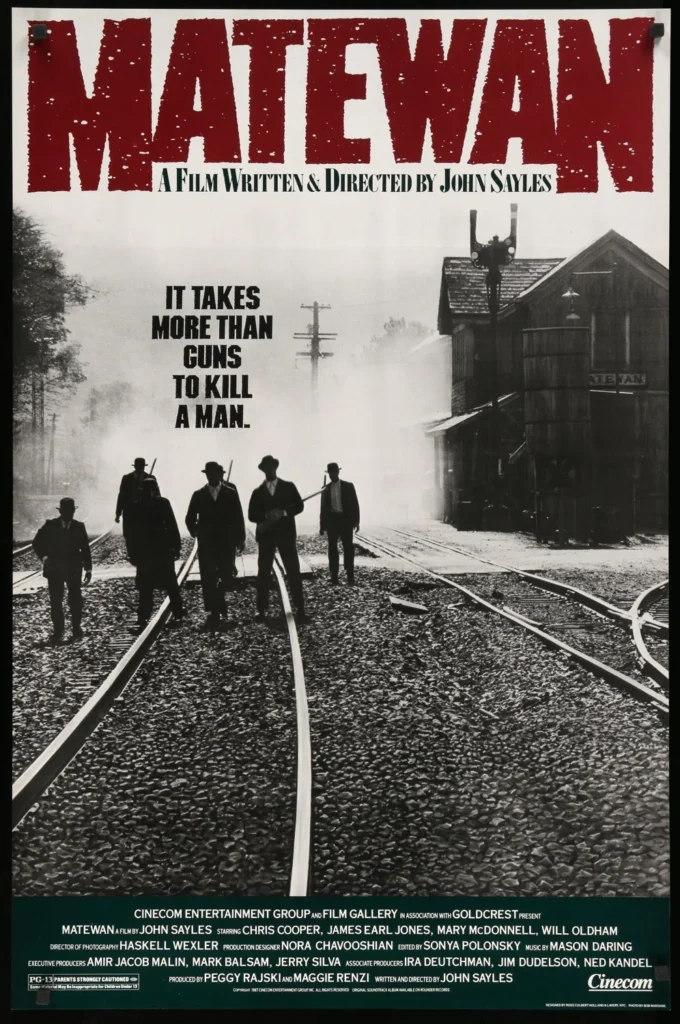
AA: Vi Matewan anoche. Me llamó la atención que muchos de esos mineros de Virginia Occidental que luchaban contra la empresa probablemente votarían hoy por Donald Trump. ¿Cómo ocurre algo así?
JS: Desesperación. Queda muy poco trabajo en muchos de esos lugares. Hay deudas. Hay inseguridad económica. También existe una fuerte cultura cristiana fundamentalista. Si aparece alguien prometiendo arreglarlo todo mientras les dice a las personas que el otro bando amenaza a sus hijos y su forma de vida, mucha gente lo apoyará.
AA: Eight Men Out es una gran película sobre béisbol, pero también es un estudio sobre la corrupción estadounidense.
JS: Fundamentalmente era una historia laboral. Los jugadores pertenecían a un equipo de una manera que hoy resulta difícil imaginar. Si cuestionaban las condiciones bajo las cuales trabajaban, los dueños podían decirles, en esencia: siéntense, les pertenecemos. Somos dueños de su carrera. Los sobornos estuvieron mal, pero surgieron de un sistema corrupto. En distintas formas, hemos visto cómo algunas de esas presiones han aumentado durante nuestras vidas, especialmente con el debilitamiento de las instituciones laborales.
AA: ¿Cómo ves que ese deterioro se manifiesta hoy?
JS: Un ejemplo son los medios de comunicación. Hace una generación, una organización periodística podía asumir ciertos riesgos y esperar sobrevivir a ellos. Hoy, las corporaciones son dueñas de la mayoría de los grandes medios, y esas corporaciones dependen de la aprobación gubernamental para fusiones, adquisiciones y decisiones regulatorias. Eso cambia los incentivos.
Si te amenazan con demandas multimillonarias, o si tu empresa matriz tiene miles de millones de dólares dependiendo de una aprobación gubernamental, la presión aumenta enormemente. La gente ya no teme solamente perder un empleo. Teme no volver a trabajar nunca más en esa industria. En muchos casos, quienes están dentro de esas organizaciones ya no controlan las instituciones para las que trabajan.
AA: ¿Crees que la cultura independiente está bajo más presión ahora que en cualquier otro momento de nuestras vidas?
JS: Sin duda todo lo que he hecho siempre ha estado en los márgenes de la industria cinematográfica. Pero una de las cosas que ha cambiado es quién toma las decisiones. Antes, los estudios estaban dirigidos por personas que amaban el cine. Ahora, quienes toman esas decisiones suelen ser ejecutivos mirando hojas de cálculo.
Tienen muy poca conexión con la obra misma. Están observando ganancias trimestrales, precios de acciones, fusiones y cifras de streaming. Si algo no encaja en ese modelo, el impulso suele ser eliminarlo. El proceso de toma de decisiones se ha vuelto tan impulsado por la ganancia y tan desconectado de la experiencia real de hacer arte que puede resultar profundamente alienante. Es difícil sentir que uno trabaja para seres humanos.
AA: Hace algunos años hablaste de haber llegado a un punto en que la situación política y cultural de Estados Unidos te hizo preguntarte qué podía cambiarse realmente. ¿Dónde estás ahora? ¿Todavía te despiertas creyendo que hay algo por lo que vale la pena luchar a través del arte y la cultura?
JS: Hay que mirar las cosas a largo plazo. Tengo setenta y cinco años. No espero resolver estos problemas. Ningún sistema va a resolverlo todo porque estamos tratando con seres humanos. Los seres humanos aprenden a manipular cualquier sistema, ya sea el capitalismo, el comunismo o cualquier otro.
Una cosa que la derecha estadounidense entendió muy bien es que el poder no se conquista de la noche a la mañana. Pasaron décadas tomando juntas escolares, gobiernos estatales, tribunales y, finalmente, la Corte Suprema. Trabajaron con paciencia.
Entonces la pregunta pasa a ser: ¿qué puedo hacer con el tiempo que me queda? Tomas decisiones todos los días. Si diriges un negocio, puedes decidir si maximizar las ganancias es lo único que importa. Puedes decidir cómo se trata a las personas que trabajan para ti. Puedes decidir si ganar un poco menos de dinero vale la pena para tratar a otros seres humanos con más dignidad.
AA: Pero parece existir una creencia cada vez más extendida de que ayudar a otras personas es irracional. Que si no aumenta tu riqueza o tu estatus, ¿para qué hacerlo?
JS: Oliver Stone entendió algo en Wall Street cuando nos dio la frase: “La codicia es buena”. Todo el mundo la recuerda porque reflejaba algo real.
Después de las convulsiones de los años sesenta, cuando mucha gente se preguntaba quién estaba siendo explotado y cómo cambiarlo, hubo un fuerte impulso en la dirección opuesta. El mensaje pasó a ser: ocúpate primero de ti mismo.
Es un mensaje poderoso, especialmente en un país con una red de protección social débil. La gente se siente vulnerable. Siente que tiene que ser despiadada para sobrevivir. Pero esa idea siempre ha estado presente en la vida estadounidense. Está en los barones ladrones. Está en la cultura corporativa. A veces se vuelve dominante y a veces retrocede.
Espero que estemos viviendo uno de esos momentos que finalmente pasan.
AA: Una de las cosas que más me gustaron de City of Hope es que nadie se despierta por la mañana pensando que es corrupto.
JS: Exacto. Si los hijos de tu hermano necesitan comer, ¿de verdad vas a negarle un puesto fantasma por algún principio abstracto? Eso es mucho pedirle a la gente.
AA: Especialmente en culturas donde la familia es lo primero.
JS: Exactamente. ¿Qué clase de persona le niega trabajo a su hermano cuando tiene el poder de ayudarlo? Ahí es donde las cosas se complican. La pregunta siempre es: cuando decimos “nosotros”, ¿qué tan grande es ese nosotros?
¿Significa tu familia? ¿Tu barrio? ¿Tu ciudad? ¿Tu país?
Esa es una pregunta que atraviesa gran parte de mi trabajo. A veces personas que no tienen nada en común descubren que comparten un enemigo común. Lo vimos en la historia de los trabajadores mineros. Personas que normalmente no estarían juntas de pronto se dan cuenta de que enfrentan el mismo problema.
AA: Es una gran manera de terminar.
JS: Bueno, es una pregunta que nunca desaparece realmente.
America Was Never America: John Sayles
The chief export of the United States is myth. Frontier myths. Success myths. Freedom myths. Myths so powerful that generations have organized their lives around them, defended them, killed for them, crossed oceans to become part of them.
Across films such as Matewan, Eight Men Out, City of Hope, and Lone Star, John Sayles has challenged the chief American export, returning to the same questions: Who benefits from the story a country tells about itself? Who gets excluded from it? At what point does a useful myth become a dangerous one? Long before the current moment, Sayles was making films about labor exploitation, corruption, race, borders, inequality, historical memory, and the gap between official narratives and lived reality. Not as abstractions, but as ordinary human experiences. The systems that live through our neighbors, relatives, workers, and through us. We spoke with the great filmmaker about the mythology of the nation, the weakening of institutions, the triumph of profit over culture, the meaning of solidarity, and a question that runs through much of his work: when we say “we,” who exactly do we mean?
AA: Your films have addressed the American story in ways that few American artists have. Was America ever real?
JS: I think you can ask that question about every country. A country is an idea. People draw borders on a map, but the land doesn’t care where those lines are. Nations exist in people’s heads. Sometimes that’s useful. It helps people organize, build roads, create institutions. But those stories have to be examined constantly.
That was part of the basis for Lone Star. I grew up with the myth of the Alamo. I saw the television shows and movies. Then I looked into it more closely and realized something wasn’t right. The freedom many Texans were fighting for was the freedom to own slaves. That was one of the central reasons they wanted to break away from Mexico. At a certain point you have to ask whether a national myth is doing more harm than good.
AA: In Lone Star, the Kris Kristofferson sheriff—Charlie Wade—how would he define America?
JS: Racially. He comes out of the Texas Ranger tradition, which was heavily focused on controlling Mexicans. It didn’t matter if your family had lived on that land for six generations. If you were Mexican, you were not afforded the same rights as people who considered themselves fully American.
AA: I watched Matewan last night. It struck me that many of those West Virginia miners fighting the company would probably vote for Donald Trump today. How does that happen?
JS: Desperation. There is very little work left in many of those places. There’s debt. There’s economic insecurity. There’s also a strong fundamentalist Christian culture. If somebody comes along promising to fix everything while telling people that the other side is threatening their children and their way of life, many people will support him.
AA: Eight Men Out is a great baseball film, but it’s also a study of American corruption.
JS: It was fundamentally a labor story. Players belonged to a team in a way that’s difficult to imagine today. If they challenged the conditions they worked under, the owners could effectively tell them: sit down, we own you. We own your career. The bribes were wrong, but they emerged from a corrupt system. In different forms, we’ve seen some of those pressures increase over our lifetimes, especially with the weakening of labor institutions.
AA: How do you see that deterioration playing out now?
JS: One example is the media. A generation ago, a news organization could take certain risks and expect to survive them. Today, corporations own most of the major outlets, and those corporations depend on government approval for mergers, acquisitions, and regulatory decisions. That changes the incentives.
If you’re threatened with massive lawsuits, or your parent company has billions of dollars riding on government approval, the pressure becomes much greater. People aren’t just worried about losing a job. They’re worried about never working in that industry again. In many cases, the people inside those organizations no longer control the institutions they work for.
AA: Do you think independent culture is under greater pressure now than at any other point in our lifetimes?
JS: Certainly everything I’ve done has been marginal to the movie business. But one thing that’s changed is who makes the decisions. It used to be that people who loved movies ran movie studios. Now the people making those decisions are often executives looking at spreadsheets.
They don’t have much connection to the work itself. They’re looking at quarterly profits, stock prices, mergers, streaming numbers. If something doesn’t fit that model, the impulse is often to get rid of it. The decision-making process has become so profit-driven and so detached from the actual experience of making art that it can feel deeply alienating. It’s difficult to feel like you’re working for human beings anymore.
AA: A few years ago you spoke about reaching a point where the political and cultural situation in the United States made you question what could realistically be changed. Where do you stand now? Do you still wake up believing there’s something worth fighting for through art and culture?
JS: You have to take the long view. I’m seventy-five years old. I don’t expect to solve these problems. No system is ever going to solve everything because we’re dealing with human beings. Human beings learn how to manipulate every system, whether it’s capitalism, communism, or something else.
One thing the American right understood very well is that power isn’t won overnight. They spent decades taking over school boards, state governments, courts, and eventually the Supreme Court. They worked patiently.
So the question becomes: what can I do with the time I have? You make choices every day. If you run a business, you can decide whether maximizing profit is the only thing that matters. You can decide how the people who work for you are treated. You can decide whether making a little less money is worth treating other human beings with more dignity.
AA: But there seems to be a growing belief that helping other people is irrational. That if it doesn’t increase your own wealth or status, why bother?
JS: Oliver Stone was onto something in Wall Street when he gave us the line, “Greed is good.” Everybody remembers it because it reflected something real.
After the upheavals of the 1960s, when a lot of people were asking who was getting screwed and how to change it, there was a powerful push in the opposite direction. The message became: take care of yourself first.
It’s a strong message, especially in a country with a weak safety net. People feel vulnerable. They feel they have to be ruthless to survive. But that idea has always been present in American life. It’s there in the robber barons. It’s there in corporate culture. Sometimes it becomes dominant, and sometimes it recedes.
I hope we’re living through one of those moments that eventually passes.
AA: One of the things I loved about City of Hope is that nobody wakes up in the morning thinking they’re corrupt.
JS: That’s right. If your brother’s kids need to eat, are you really going to refuse him a no-show job because of some abstract principle? That’s asking a lot of people.
AA: Especially in cultures where family comes first.
JS: Exactly. What kind of person denies his brother a job when he has the power to help him? That’s where things get complicated. The question is always: when we say “we,” how big is that we?
Does it mean your family? Your neighborhood? Your city? Your country?
That’s a question that runs through a lot of my work. Sometimes people who have nothing in common discover they share a common enemy. You saw that in the history of the mine workers. People who normally wouldn’t stand together suddenly realize they’re facing the same problem.
AA: That’s a hell of a way to end it.
JS: Well, it’s a question that never really goes away.