
NAIAN GONZÁLEZ NORVIND
CUANDO LA CIUDAD DEJA DE ACTUAR
NAIAN GONZÁLEZ NORVIND
WHEN THE CITY STOPS PERFORMING
Naian González Norvind ha construido el tipo de carrera que importa: cine independiente, papeles difíciles, directores con algo en juego. Leona. Nuevo orden. Corina. Daniel & Ana. South Mountain. Un trabajo que le exige algo al actor más allá de la presencia, y al público más allá de la atención. En estas películas no hay una distancia segura. Clase, sexo, pertenencia, violencia, familia: las cosas que realmente determinan cómo nos movemos por el mundo tienen cabida aquí. Norvind trabaja en ese lugar, en ese espacio incómodo donde el cine deja de explicar la vida y empieza a examinarla.
Es una actriz de la Ciudad de México. Nació aquí, creció aquí y entiende la ciudad desde dentro: sus líneas de clase y sus fronteras privadas, su peligro y su humor, la extraña coexistencia de intimidad e inmensidad. Eso es lo que esta guía ha estado buscando desde el principio. No lugares que visitar, sino maneras de estar aquí. No un mapa de la Ciudad de México, sino un registro de lo que la ciudad le hace a la conciencia. Norvind es otra coordenada.
AA: Has hablado de tu admiración por Cassavetes. Alguna vez describí la Ciudad de México como un lugar a medio camino entre Cassavetes y Lovecraft: lo hiperíntimo desplegándose dentro de lo cósmicamente enorme. ¿Dónde te sitúas tú dentro de eso?
NGN: Me encanta tu lectura de la ciudad; definitivamente mezcla el realismo de Cassavetes con esa atmósfera de Lovecraft donde “la realidad supera a la ficción”. Creo que la Ciudad de México es un mosaico de existencias individuales tan distintas que inevitablemente te lleva a aceptar todo aquello que es diferente. Te amplía la mente respecto a lo que incluso consideramos real. No por nada André Breton, padre del movimiento surrealista de principios del siglo XX, dijo célebremente: “No sé por qué vine aquí, no tengo nada que enseñarles, México es el país más surrealista del mundo”. Algo que me encanta de la ciudad es que, aunque la tecnología nos aprieta cada vez más, como sucede en todas partes, sigo sin ver a tanta gente pegada al teléfono como en otras grandes ciudades. Parece un detalle mínimo, pero cambia la manera en que interactúas. Quizá sea simplemente porque las banquetas están tan absurdamente chuecas que no te queda otra que estar presente o te rompes la nariz.
AA: Nuevo orden comienza con las divisiones socioeconómicas de la Ciudad de México y de ahí se adentra en la condición humana misma. ¿Hay verdades que se sostienen desde Ecatepec hasta Lomas de Chapultepec? ¿Y puede el arte llegar a ellas sin negar las enormes diferencias entre esos mundos?
NGN: Creo firmemente que el verdadero arte sí logra reunirnos a todos bajo el mismo abanico de miedos, anhelos, necesidades y deseos, sin importar la raza, la cultura, la situación económica o incluso el momento histórico del que vengamos. La muerte, el duelo, el miedo a lo desconocido, encontrarse dividido entre dos caminos en la vida, enamorarse, la ambición, el valor, la cobardía, la esperanza: todos son temas transversales que nos incluyen a todos. Tengo amigos que han enseñado Shakespeare en cárceles mexicanas y dicen que en ningún otro lugar alguien ha entendido tan perfectamente a Macbeth, por ejemplo. Dicho esto, México es uno de esos países donde la brecha entre ricos y pobres es terriblemente amplia, y es difícil presenciar esa desigualdad. Hay dificultades específicas que pesan mucho más sobre ciertos grupos que sobre otros, pero lo que se me queda, por encima de todo, es cómo la gente aquí se aferra a la alegría, incluso cuando la vida acumula tantas cosas en su contra.
AA: Has mencionado a Bergman como una influencia, y gran parte de su obra comienza justo donde el rostro que presentamos al mundo empieza a desmoronarse. La Ciudad de México nos exige tanta actuación. ¿Qué ocurre debajo de la tuya, y eso entra en tu trabajo?
NGN: En realidad, no siento que la Ciudad de México nos exija actuar; todo lo contrario. No creo que sea una ciudad que “actúe”, y creo que por eso la gente la ama: por su magnetismo y autenticidad intrínsecos. Siempre está desbordándose de vida genuina; no se siente demasiado pulcra ni cuidadosamente construida. Es rebelde por naturaleza. Y en cuanto a mí, precisamente porque profesionalmente estoy actuando todo el tiempo, no siento ninguna necesidad ni inclinación de hacerlo en la vida real. Si me descubro haciéndolo, inmediatamente doy marcha atrás. Aunque también es cierto que “el mundo entero es un escenario”… ¿no?
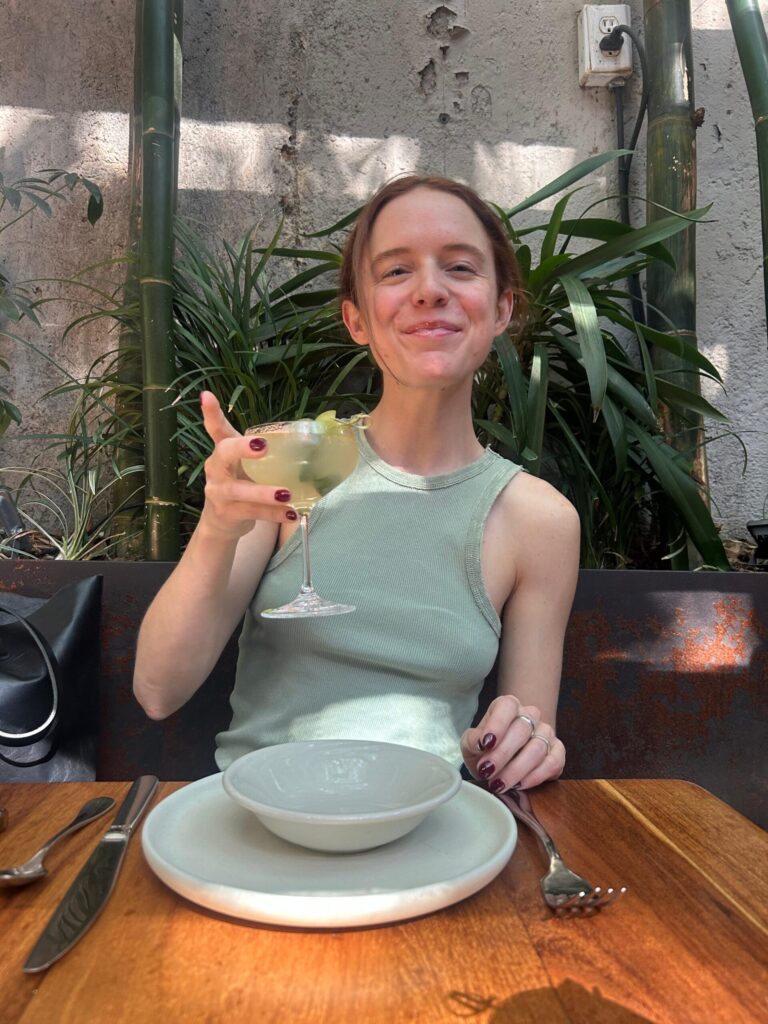
AA: En Corina, unas cuantas cuadras conocidas se convierten en un mundo entero, y cruzar una frontera invisible se vuelve un acto de enormes consecuencias. Todos construimos una ciudad privada dentro de la Ciudad de México. ¿Cómo es la tuya y cuáles son las fronteras que rara vez cruzas?
NGN: Qué buena pregunta. Creo que mi ciudad privada no está delimitada geográficamente, sino más bien emocionalmente. Cuando no estoy filmando disfruto ser un animal de costumbres, y vuelvo a los lugares y a las personas que me hacen sentir bien. Ser clienta habitual de mi café de siempre, salir a correr al Bosque de Chapultepec, tomarme un vermut en algún bar cercano, ver a mis amigos o a mi familia. No me llevo muy bien con las multitudes, así que trato de evitar los lugares demasiado turísticos. Mi otra frontera serían las zonas más peligrosas, donde objetivamente es menos seguro para las mujeres.
AA: En Leona, pertenecer nos da identidad, historia y comunidad, pero también puede convertirse en una frontera alrededor del yo. La Ciudad de México puede hacer lo mismo. ¿Cuánto de quien eres te lo ha dado esta ciudad, y cuánto de ti has tenido que proteger de ella?
NGN: Eso me lleva muy naturalmente a responder esta siguiente pregunta. Por supuesto que, al crecer aquí siendo mujer, tienes que volverte hipervigilante, pero también desarrollas buenos reflejos y buen olfato. Ojalá viviéramos en un país —o, ya puestos, en un mundo— que fuera menos hostil para la seguridad de las mujeres. Pero más allá de eso, estoy profundamente agradecida con esta ciudad; te enriquece el alma si se lo permites. Para mí, el tesoro de esta ciudad es su gente: cálida, ingeniosa, traviesa.
AA: ¿Alguna vez has pensado en traer un festival de cine de Cassavetes a la Ciudad de México?
NGN: ¡Si todavía no ha habido uno, deberíamos organizarlo! La Cineteca Nacional sería el lugar ideal. Esta institución tan querida, tanto para el cine independiente mexicano como para el internacional, está recibiendo tantos visitantes que incluso acaba de abrir una nueva sede dentro de la ciudad. En un mundo donde cada vez vemos más cine desde casa, ¿quién dijo que el cine independiente no podía convocar a una multitud?
Naian González Norvind has built the kind of career that matters: independent films, difficult roles, directors with something at stake. Leona. Nuevo orden. Corina. Daniel & Ana. South Mountain. Work that asks something of an actor beyond presence, and of an audience beyond attention. There is no safe distance in these films. Class, sex, belonging, violence, family—the things that actually determine how people move through the world are allowed into the room. Norvind works there, in that uncomfortable space where cinema stops explaining life and starts examining it.
She is a Mexico City actress. Born here, raised here, she understands the city from inside it: its class lines and private borders, its danger and humor, the strange coexistence of intimacy and immensity. That is what this guide has been looking for from the beginning. Not places to visit, but ways of being here. Not a map of Mexico City, but a record of what the city does to consciousness. Norvind is another coordinate.
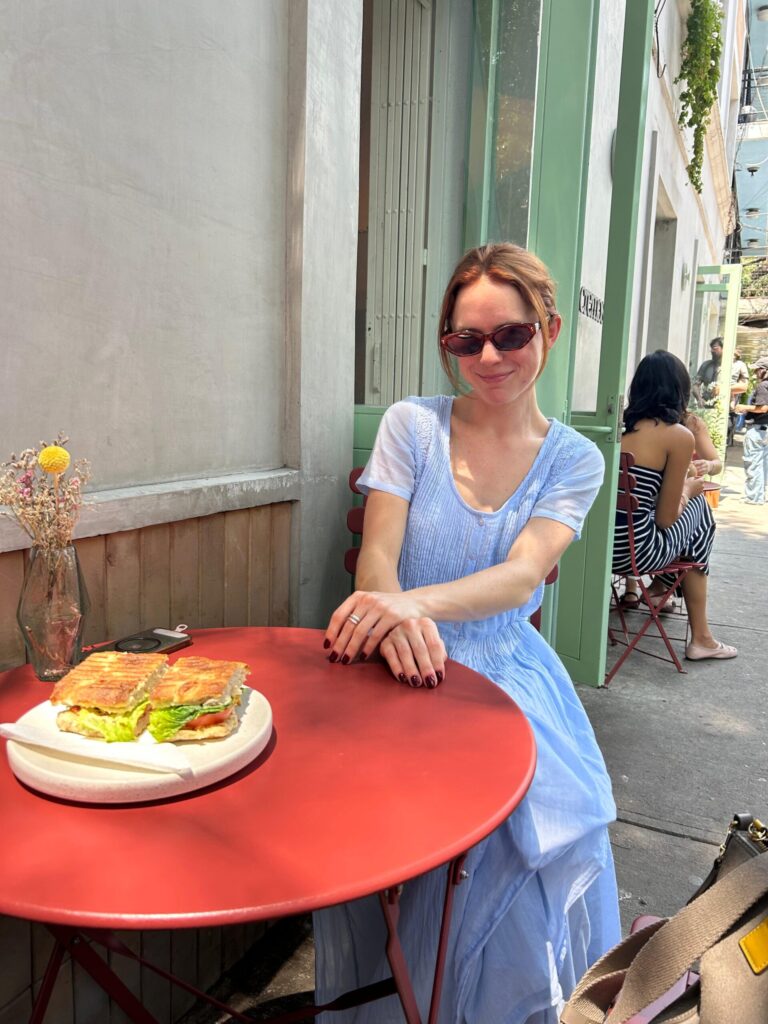
AA: You’ve spoken of your admiration for Cassavetes. I once described Mexico City as somewhere between Cassavetes and Lovecraft—the hyper-intimate unfolding inside the cosmically enormous. Where do you locate yourself within that?
NGN: I love your take on the city, it definitely mixes Cassavetes’ realness with Lovecraft’s “stranger than fiction” atmosphere. I think Mexico City is a mosaic of such varied individual existences that it inevitably pulls you into an acceptance of anything that’s different. It broadens your mind as to what’s even real. It’s not for nothing that André Breton, father of the surrealist movement in the early 20th century, famously said “I don’t know why I came here, I have nothing to teach them, Mexico is the most surrealist country in the world.” Something I love about the city is that although the grip of technology is tightening around us, as it’s doing everywhere, I still don’t see as many people on their phones here as I see in other big cities. It seems like such a tiny detail but it changes the way you interact. Maybe it’s just because the sidewalks are so insanely crooked you can’t help but be present otherwise you’d break your nose.
AA: New Order begins with the socioeconomic divisions of Mexico City and moves into the human condition itself. Are there truths that hold from Ecatepec to Lomas de Chapultepec? And can art reach them without denying the enormous differences between those worlds?
NGN: I’m a strong believer that true art does bring everyone together under the same panoply of fears, yearnings, needs and desires, no matter what race, culture, economic status, or even time in history they’re from. Death, mourning, fear of the unknown, being split between two paths in life, falling in love, ambition, courage, cowardice, hope, are all transversal subjects that include everyone. I have friends who have taught Shakespeare in Mexican prisons and say that nowhere else has someone so perfectly understood Macbeth for example. That being said, Mexico is one of those countries where the wealth gap is terribly wide, and that disparity is hard to behold. There are specific hardships that weigh more on some groups of people than others, but what stays with me overall is how people here hang on to joy, even when life is stacking so much against them.
AA: You’ve named Bergman as an influence, and so much of his work begins where the face we present to the world starts to break down. Mexico City demands so much performance from us. What happens underneath yours, and does it enter your work?
NGN: I actually don’t feel like Mexico City demands performance from us, all the opposite. I don’t think it’s a city that “performs”, which is why I think people love it, for its intrinsic magnetism and authenticity. It’s always bursting with genuine life, it doesn’t feel too prim or curated. It’s rebellious by nature that way. And as for myself, it’s precisely because I’m always performing professionally that I feel no need or inclination to do so in real life. If I catch myself doing it I’ll immediately pull back. Nonetheless it’s true that “all the world’s a stage” … isn’t it?
AA: In Corina, a few familiar blocks become an entire world, and crossing an invisible boundary becomes an act of enormous consequence. We all construct a private city within Mexico City. What does yours look like, and what are the boundaries you rarely cross?
NGN: Such a good question. I think my private city isn’t bound geographically but more emotionally. Whenever I’m not filming I enjoy being a creature of habit, and I go back to the places and people that make me feel good. Being a regular at my local coffee shop, taking a jog in el Parque de Chapultepec, having a glass of vermouth at a nearby bar, seeing my friends or family. I don’t do too well with crowds, so I try to avoid very touristy places. My other boundary would be the more dangerous neighborhoods, where it’s objectively less safe for women.
AA: In Leona, belonging gives us identity, history and community, but can also become a boundary around the self. Mexico City can do the same. How much of who you are has this city given you, and how much of yourself have you had to protect from it?
NGN: That leads me smoothly into answering this next question. Of course you have to become hyper-vigilant as a woman growing up here, but you also develop good reflexes and a good nose. I wish we lived in a country, or world for that matter, that was less hostile to women’s safety. But beyond that, I’m profoundly grateful towards this city, it will enrich your soul if you let it. For me it’s the people in this city that are its treasure: warm, resourceful, mischievous.
AA: Have you ever thought about bringing a Cassavetes film festival to Mexico City?
NGN: If there hasn’t been one already we should plan it! The Cineteca Nacional would be the ideal place for that. This beloved institution for both Mexican and international independent cinema is getting so many visitors it actually just expanded with a new venue within the city. In a world where home viewing is taking over, who said indie cinema couldn’t draw a crowd?